
【(日本語)多言語ブログ/日本語をベースにしたタイ語、英語、中国語の翻訳文を挿入しております。またPodcastを末尾に掲載しています。】
【(ไทย)บล็อกหลายภาษา / ใช้ภาษาญี่ปุ่นเป็นต้นฉบับ และมีการแปลเป็นภาษาจีน อังกฤษ และไทย
ต้นฉบับภาษาญี่ปุ่นและพอดแคสต์จะแนบไว้ที่ส่วนท้ายของบทความ】
【(English)Multilingual Blog / Based on the original Japanese text, translations in Chinese, English, and Thai are included.
The original Japanese text and podcast are provided at the end.
【(中文)多语言博客/以日语为基础,插入了中文、英文和泰语的翻译内容。日语原文及播客链接附在文末。】
―― 技術の前に整えるべき「介護のOS」――
隅田川の朝から始まる気づき
おはようございます。利久です。
今日も「ウエルエイジング・アワー」朝のウォーキングラジオを、隅田川のほとりからお届けします。
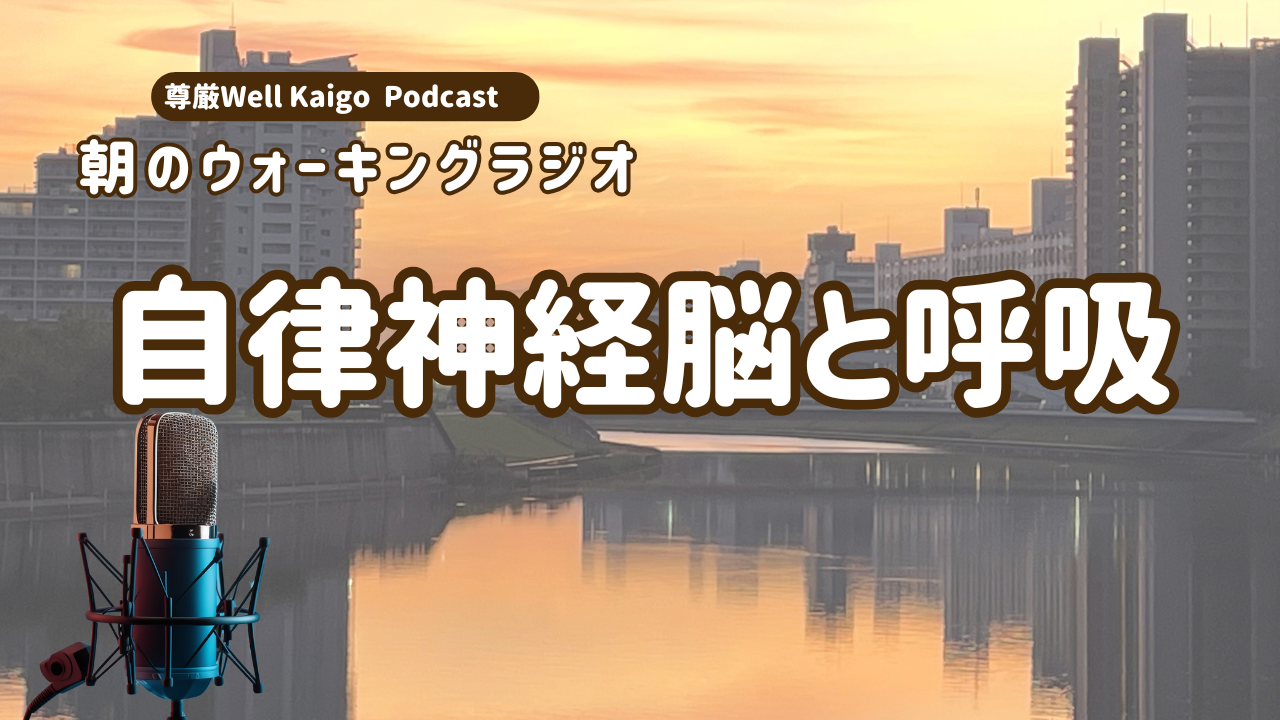
今朝の東京・隅田川の上空は、青空とオレンジ色の光が混ざり合い、建物や水面に反射してとても美しく輝いていました。今日はマイクなしでの収録のため、音声が少し聞き取りづらいかもしれませんが、ご容赦ください。
本日のテーマは
「尊厳Well-Kaigo|自律神経脳と呼吸」 です。
タイ視察団との時間が教えてくれたこと
つい先日まで、タイからの介護視察団の皆さんと4日間をご一緒しました。そのうち3日間は、行動を共にし、たくさんの対話を重ねる時間となりました。
今頃、タイの皆さんは日本より2時間遅い現地時間で、朝を迎えている頃かもしれません。どうかゆっくり休んでいただきたい、そんな気持ちでいます。
この視察期間中、私は多くのことを学びました。
「これは伝わる」「これは伝わりにくい」「ここに疑問が生まれる」「実はもっと別のものを求めている」——そうした気づきが、対話の中で次々と浮かび上がってきました。
特に印象的だったのは、タイの皆さんの穏やかさと真摯さです。
人の話を最後まで丁寧に聴き、前向きに受け止める姿勢は、国民性なのか、チームの個性なのかは分かりませんが、私がいつもタイの方々から感じる大切な文化だと感じています。
国を超えた「人と人」のつながり
今回の視察では、行政関係者、医療従事者、リハビリの専門家、IT分野の方、管理部門の方、そしてトップオーナーの方々が参加されました。
さらに、通訳として全体を支えてくださったポンちゃんさんの存在も欠かせませんでした。
また、千葉県のユニット型特別養護老人ホーム「プレミア東松戸」、神奈川県鎌倉市のグループホーム「華花」の皆さんにも、心から感謝しています。
視察中、高齢者の方々と視察団が自然に会話し、歌を唄い、お土産を交換し合う光景がありました。その様子を見て、目を潤ませている方もいました。
私はその瞬間、
「交流が始まった。国を超えて、人と人がつながった」
そう強く感じました。
それは知識の交換ではなく、感情と感情が触れ合う体験でした。
高齢者が「生きている」その姿そのものが、相手の心を動かしたのだと思います。これこそが、尊厳Well-Kaigoが伝えたかった本質なのではないでしょうか。
技術や制度の前に必要なもの
日本にいる間、何度もディスカッションを重ねました。
現場で見たもの、感じたものを、制度や技術、ユニットケア、尊厳という言葉で整理していくことで、視察団の皆さんの理解が深まっていったように感じます。
ただ、私はそこで一つの仮説を持っていました。
「介護にはOSが必要なのではないか」
パソコンでいうオペレーションシステム(OS)がなければ、プログラムやソフトは動きません。同じように、介護の技術、制度、プロダクトが本当に機能するためには、その土台となるOSが必要だと考えています。
私が考える介護のOS——それが「呼吸」です。
自律神経脳という考え方
ここで「自律神経脳」という言葉が出てきますが、これは学術用語ではありません。私が説明のために使っている言葉です。
自律神経には、交感神経と副交感神経があります。
高齢になり、認知症が進行していく過程で、この自律神経のバランスが大きく影響している——それは、長年の現場経験から感じてきたことです。
では、脳はこの自律神経をどう捉えているのか。
そう考えたときに「自律神経脳」という視点で整理すると、伝えやすくなると感じました。
全ての人に共通するものは「呼吸」
人とは何か。老いるとは何か。その人は今、何を感じているのか。
私は常に「一人ひとりの人」にフォーカスしたいと思っています。
しかし、人と言った瞬間に、国や文化、言語の違いが立ちはだかります。
そこで浮かび上がってくるのが「呼吸」です。
人はどの国にいても、呼吸をして生きています。
言葉が通じなくても、空気や呼吸、場の雰囲気は伝わります。
自律神経は意識ではコントロールできません。
しかし、呼吸を通して「整える」ことはできる。
空気の質、温度、光、人と人のリズム。
それらが呼吸を通じて、自律神経に影響を与えます。
呼吸OSの上に、すべてが乗る
私は、まず「呼吸OS」を整えることが重要だと考えています。
その上に初めて、介護技術、教育、プロダクト、食事、福祉用具などが意味を持つ。
言葉が通じない場面でも、
自分自身がゆっくりと呼吸を整えることで、相手の緊張が緩み、副交感神経が働き始める。
それが結果として、不安や怒り、BPSDと呼ばれる状態の緩和につながる可能性があるのではないか。
私はそう考えています。
介護のOSは呼吸である
今回のタイの皆さんとの交流を通して、改めて確信しました。
介護のOSは呼吸である。
それは自律神経という、人の最も根源的な働きと深く結びついています。
呼吸を整える。
それは技術以前の、最小単位の介護なのかもしれません。
今日もお聴きいただき、ありがとうございました。
どうぞ、穏やかな一日をお過ごしください。
ご質問は本サイトの「お問い合わせ欄」からお気軽にお寄せください。
↓↓↓詳細は音声配信Podcastから「ながら聴取」をしてください。
↓↓↓การแปลภาษาไทย(タイ語翻訳)
การดูแลที่มีศักดิ์ศรี Well-Kaigo|สมองของระบบประสาทอัตโนมัติและการหายใจ
— ระบบปฏิบัติการของการดูแลที่ต้องปรับให้พร้อมก่อนเทคโนโลยี —
การตระหนักรู้ที่เริ่มต้นจากยามเช้าริมแม่น้ำสุมิดะ
สวัสดีตอนเช้าครับ ผมริคิว
วันนี้เช่นเคย ผมขอส่งต่อรายการวิทยุเดินยามเช้า “Well-Aging Hour” จากริมแม่น้ำสุมิดะ
เช้านี้ ท้องฟ้าเหนือแม่น้ำสุมิดะในกรุงโตเกสเต็มไปด้วยแสงสีฟ้าและสีส้มที่ผสานกันอย่างงดงาม สะท้อนบนอาคารและผิวน้ำอย่างสวยงาม เนื่องจากวันนี้ไม่ได้ใช้ไมโครโฟน เสียงอาจฟังได้ไม่ชัดเจนเล็กน้อย ขออภัยมา ณ ที่นี้ด้วยครับ
หัวข้อในวันนี้คือ
“การดูแลที่มีศักดิ์ศรี Well-Kaigo|สมองของระบบประสาทอัตโนมัติและการหายใจ”
สิ่งที่ผมได้เรียนรู้จากช่วงเวลากับคณะศึกษาดูงานจากประเทศไทย
จนถึงไม่นานมานี้ ผมได้ใช้เวลาร่วมกับคณะศึกษาดูงานด้านการดูแลจากประเทศไทยเป็นเวลา 4 วัน ในจำนวนนี้มี 3 วันที่เราเดินทางและใช้เวลาร่วมกัน พร้อมทั้งแลกเปลี่ยนบทสนทนาอย่างลึกซึ้งมากมาย
ในขณะนี้ เพื่อน ๆ จากประเทศไทยอาจกำลังต้อนรับยามเช้าในเวลาท้องถิ่น ซึ่งช้ากว่าญี่ปุ่น 2 ชั่วโมง ผมหวังเป็นอย่างยิ่งว่าทุกท่านจะได้พักผ่อนอย่างเพียงพอ
ตลอดช่วงเวลาการศึกษาดูงานครั้งนี้ ผมได้เรียนรู้หลายสิ่ง
“สิ่งนี้สื่อสารได้”
“สิ่งนี้สื่อสารได้ยาก”
“ตรงนี้ทำให้เกิดคำถาม”
“แท้จริงแล้ว พวกเขาอาจกำลังแสวงหาสิ่งอื่นอยู่”
ความตระหนักรู้เหล่านี้ค่อย ๆ ปรากฏขึ้นจากบทสนทนาแต่ละครั้ง
สิ่งที่ประทับใจผมเป็นพิเศษ คือความอ่อนโยนและความจริงใจของทุกท่านจากประเทศไทย
การรับฟังผู้อื่นอย่างตั้งใจจนจบ และการเปิดใจรับมุมมองใหม่ ๆ อย่างสร้างสรรค์ ไม่แน่ใจว่านี่คืออุปนิสัยของคนไทย หรือเอกลักษณ์ของทีมนี้โดยเฉพาะ แต่เป็นท่าทีทางวัฒนธรรมที่ผมสัมผัสได้จากคนไทยมาโดยตลอด
สายใยของ “มนุษย์กับมนุษย์” ที่ข้ามพรมแดน
คณะศึกษาดูงานในครั้งนี้ประกอบด้วยบุคลากรจากภาครัฐ ผู้เชี่ยวชาญด้านการแพทย์ ผู้เชี่ยวชาญด้านเวชศาสตร์ฟื้นฟู ผู้เชี่ยวชาญด้าน IT ผู้บริหารฝ่ายจัดการ และผู้บริหารระดับสูง
นอกจากนี้ การสนับสนุนของคุณ Pon-chan ในฐานะล่ามตลอดการเดินทางก็เป็นสิ่งที่ขาดไม่ได้
ผมขอขอบคุณจากใจจริงไปยังสถานดูแลผู้สูงอายุแบบยูนิต “Premier Higashi-Matsudo” ในจังหวัดชิบะ และกลุ่มโฮม “Hanahana” เมืองคามาคุระ จังหวัดคานางาวะ
ระหว่างการเยี่ยมชม เราได้เห็นภาพของผู้สูงอายุพูดคุย ร้องเพลง และแลกเปลี่ยนของที่ระลึกกับคณะศึกษาดูงานอย่างเป็นธรรมชาติ บางคนถึงกับน้ำตาคลอด้วยความซาบซึ้ง
ในขณะนั้น ผมรู้สึกอย่างชัดเจนว่า
“การแลกเปลี่ยนได้เริ่มต้นขึ้นแล้ว มนุษย์ได้เชื่อมโยงถึงกันข้ามพรมแดน”
นี่ไม่ใช่การแลกเปลี่ยนความรู้ แต่เป็นการพบกันของหัวใจ
การที่ผู้สูงอายุ “มีชีวิตอยู่ตรงนั้น” ได้สั่นสะเทือนหัวใจของผู้คน
ผมเชื่อว่านี่คือแก่นแท้ที่ การดูแลที่มีศักดิ์ศรี Well-Kaigo ต้องการถ่ายทอด
สิ่งที่จำเป็นก่อนเทคโนโลยีและระบบ
ระหว่างที่ทุกท่านอยู่ในญี่ปุ่น เราได้มีการอภิปรายหลายครั้ง
การนำสิ่งที่เห็นและรู้สึกจากหน้างาน มาจัดระเบียบผ่านแนวคิดเรื่องระบบ เทคโนโลยี การดูแลแบบยูนิต และศักดิ์ศรี ทำให้ความเข้าใจของคณะศึกษาดูงานลึกซึ้งขึ้น
อย่างไรก็ตาม ผมมีสมมติฐานหนึ่งอยู่เสมอ
“การดูแลจำเป็นต้องมี OS”
หากไม่มีระบบปฏิบัติการ (OS) คอมพิวเตอร์ก็ไม่สามารถทำงานได้
ในทำนองเดียวกัน เพื่อให้เทคนิค ระบบ และผลิตภัณฑ์ด้านการดูแลทำงานได้จริง ก็จำเป็นต้องมี OS เป็นรากฐาน
สำหรับผม OS ของการดูแลคือ
การหายใจ
แนวคิดเรื่อง “สมองของระบบประสาทอัตโนมัติ”
คำว่า “สมองของระบบประสาทอัตโนมัติ” ไม่ใช่คำทางวิชาการ แต่เป็นคำที่ผมใช้เพื่ออธิบายให้เข้าใจง่ายขึ้น
ระบบประสาทอัตโนมัติประกอบด้วย ระบบประสาทซิมพาเทติก และพาราซิมพาเทติก
จากประสบการณ์ภาคสนามที่ยาวนาน ผมรู้สึกอย่างชัดเจนว่า เมื่ออายุมากขึ้น และเมื่อภาวะสมองเสื่อมดำเนินไป ความสมดุลของระบบประสาทอัตโนมัติมีผลอย่างมากต่อสภาพของบุคคล
เมื่อเราตั้งคำถามว่า สมองรับรู้ระบบประสาทอัตโนมัติอย่างไร
การอธิบายผ่านมุมมองของ “สมองของระบบประสาทอัตโนมัติ” กลับทำให้สื่อสารได้ง่ายขึ้น
สิ่งที่มนุษย์ทุกคนมีร่วมกัน คือ “การหายใจ”
มนุษย์คืออะไร การแก่ชราคืออะไร และคนผู้นี้กำลังรู้สึกอย่างไรในขณะนี้
ผมต้องการโฟกัสที่ “แต่ละบุคคล” เสมอ
แต่เมื่อเราพูดถึงมนุษย์ ความแตกต่างทางชาติ วัฒนธรรม และภาษา ก็จะปรากฏขึ้น
สิ่งที่อยู่เหนือความแตกต่างเหล่านั้น คือ การหายใจ
ไม่ว่าประเทศใด มนุษย์ทุกคนมีชีวิตอยู่ด้วยการหายใจ
แม้คำพูดจะไม่เข้าใจกัน แต่บรรยากาศ อากาศ และการหายใจสามารถสื่อสารได้
ระบบประสาทอัตโนมัติไม่สามารถควบคุมด้วยเจตจำนงโดยตรง
แต่สามารถ “ปรับสมดุล” ได้ผ่านการหายใจ
คุณภาพอากาศ อุณหภูมิ แสง และจังหวะระหว่างผู้คน
ล้วนส่งผลต่อระบบประสาทอัตโนมัติผ่านการหายใจ
ทุกสิ่งตั้งอยู่บน “OS ของการหายใจ”
ผมเชื่อว่า สิ่งแรกที่ควรปรับให้พร้อมคือ “OS ของการหายใจ”
เมื่อฐานนี้มั่นคงแล้ว เทคนิคการดูแล การศึกษา ผลิตภัณฑ์ อาหาร และอุปกรณ์ช่วยเหลือจึงจะมีความหมายอย่างแท้จริง
แม้ในสถานการณ์ที่ภาษาไม่สามารถสื่อสารกันได้
หากเราหายใจอย่างช้า ๆ และทำให้ตนเองสงบลง ความตึงเครียดของอีกฝ่ายก็อาจคลายลง และระบบพาราซิมพาเทติกเริ่มทำงาน
ผลลัพธ์อาจนำไปสู่การลดความกังวล ความโกรธ และภาวะที่เรียกว่า BPSD
นี่คือสิ่งที่ผมเชื่อมั่น
OS ของการดูแล คือการหายใจ
ผ่านการแลกเปลี่ยนกับเพื่อน ๆ จากประเทศไทยในครั้งนี้ ผมยิ่งมั่นใจมากขึ้นว่า
OS ของการดูแล คือการหายใจ
มันเชื่อมโยงอย่างลึกซึ้งกับระบบประสาทอัตโนมัติ ซึ่งเป็นกลไกพื้นฐานที่สุดของชีวิตมนุษย์
การปรับการหายใจ
อาจเป็นหน่วยที่เล็กที่สุดของการดูแล ก่อนเทคโนโลยีใด ๆ
ขอบคุณทุกท่านที่รับฟังในวันนี้
ขอให้ท่านมีวันอันสงบและราบรื่น
หากมีคำถามใด ๆ โปรดติดต่อเราผ่านช่องทาง “ติดต่อเรา” บนเว็บไซต์นี้ได้เสมอ
↓↓↓English Translation(英語翻訳)
Dignity Well-Kaigo | The Autonomic Nervous System Brain and Breathing
— The “Caregiving OS” That Must Be Set Before Technology —
An Insight That Begins with a Morning by the Sumida River
Good morning. This is Rikyu.
Today as well, I bring you the “Well-Aging Hour” morning walking radio from the banks of the Sumida River.
This morning, the sky above the Sumida River in Tokyo was filled with a blend of blue and orange light, reflecting beautifully off buildings and the surface of the water. As I am recording without a microphone today, the audio may be slightly difficult to hear. Thank you for your understanding.
Today’s theme is:
“Dignity Well-Kaigo | The Autonomic Nervous System Brain and Breathing.”
What Time with the Thai Study Tour Taught Me
Until just recently, I spent four days together with a caregiving study tour group from Thailand. For three of those days, we moved together and shared many deep conversations.
At this very moment, the members from Thailand may be welcoming the morning in their local time, which is two hours behind Japan. I sincerely hope they are getting plenty of rest.
Throughout this study tour, I learned a great deal.
“This is understood.”
“This is difficult to convey.”
“Here, questions arise.”
“In fact, they may be seeking something entirely different.”
These realizations surfaced one after another through dialogue.
What left the strongest impression on me was the calmness and sincerity of the Thai participants. Their attitude of listening attentively to others until the very end and receiving ideas with openness and positivity may be part of their national character or the nature of this particular team—but it is a cultural quality I have consistently felt in people from Thailand.
Human-to-Human Connections That Transcend Borders
This study tour included participants from government-related sectors, healthcare professionals, rehabilitation specialists, IT experts, administrative leaders, and top-level owners. In addition, the presence of Pon-chan, who supported the entire group as an interpreter, was absolutely essential.
I would also like to express my heartfelt gratitude to everyone at the unit-based special nursing home Premier Higashi-Matsudo in Chiba Prefecture, and to the group home Hanahana in Kamakura City, Kanagawa Prefecture.
During the visits, there were moments when elderly residents and members of the study tour naturally engaged in conversation, sang together, and exchanged small gifts. Some observers were visibly moved, their eyes filled with tears.
In that moment, I felt strongly:
“Exchange has begun. People are connecting beyond national borders.”
This was not an exchange of knowledge, but an experience where emotions met emotions. The simple fact that elderly people were living, right there before our eyes, moved the hearts of others. I believe this is the very essence that Dignity Well-Kaigo seeks to convey.
What Is Needed Before Technology and Systems
While the group was in Japan, we engaged in many discussions. By organizing what we saw and felt on site using concepts such as systems, technology, unit care, and dignity, it seemed that the understanding of the study tour participants deepened.
However, I held one hypothesis throughout.
“Caregiving requires an OS.”
Without an operating system (OS), computers cannot run programs or software. In the same way, for caregiving techniques, systems, and products to truly function, there must be a foundational OS.
The caregiving OS I propose is breathing.
The Concept of the “Autonomic Nervous System Brain”
Here, the term “autonomic nervous system brain” appears. This is not an academic term; it is one I use for explanatory purposes.
The autonomic nervous system consists of the sympathetic and parasympathetic nervous systems. Through years of field experience, I have felt strongly that the balance of this system plays a major role as people age and as dementia progresses.
So how does the brain perceive the autonomic nervous system?
When viewed from this perspective, organizing the idea as an “autonomic nervous system brain” makes it easier to communicate.
What All People Have in Common: Breathing
What does it mean to be human? What does it mean to grow old? What is this person feeling right now?
I always want to focus on each individual person.
Yet the moment we say “people,” differences in nationality, culture, and language emerge. What rises above those differences is breathing.
No matter which country we live in, we breathe to live.
Even when words do not reach one another, air, breathing, and the atmosphere of a place do.
The autonomic nervous system cannot be controlled by conscious will.
However, it can be regulated through breathing.
Air quality, temperature, light, and the rhythm between people—all of these influence the autonomic nervous system through breathing.
Everything Rests Upon the Breathing OS
I believe that the first priority is to set the “breathing OS.”
Only then do caregiving techniques, education, products, meals, and assistive devices begin to truly carry meaning.
Even in situations where words do not connect, when we ourselves slow our breathing and regain calm, the tension of the other person may ease, allowing the parasympathetic nervous system to begin functioning.
As a result, this may help reduce anxiety, anger, and conditions often referred to as BPSD.
This is what I believe.
The Caregiving OS Is Breathing
Through my interactions with our Thai colleagues, I have reaffirmed this conviction.
The caregiving OS is breathing.
It is deeply connected to the autonomic nervous system, one of the most fundamental functions of human life.
To regulate breathing—
this may be the smallest unit of caregiving, even before any technique is applied.
Thank you very much for listening today.
I wish you a calm and peaceful day.
For any questions, please feel free to contact us through the “Contact” section of this website.
Dignity Well-Kaigo | The Autonomic Nervous System Brain and Breathing
— The “Caregiving OS” That Must Be Set Before Technology —
An Insight That Begins with a Morning by the Sumida River
Good morning. This is Rikyu.
Today as well, I bring you the “Well-Aging Hour” morning walking radio from the banks of the Sumida River.
This morning, the sky above the Sumida River in Tokyo was filled with a blend of blue and orange light, reflecting beautifully off buildings and the surface of the water. As I am recording without a microphone today, the audio may be slightly difficult to hear. Thank you for your understanding.
Today’s theme is:
“Dignity Well-Kaigo | The Autonomic Nervous System Brain and Breathing.”
What Time with the Thai Study Tour Taught Me
Until just recently, I spent four days together with a caregiving study tour group from Thailand. For three of those days, we moved together and shared many deep conversations.
At this very moment, the members from Thailand may be welcoming the morning in their local time, which is two hours behind Japan. I sincerely hope they are getting plenty of rest.
Throughout this study tour, I learned a great deal.
“This is understood.”
“This is difficult to convey.”
“Here, questions arise.”
“In fact, they may be seeking something entirely different.”
These realizations surfaced one after another through dialogue.
What left the strongest impression on me was the calmness and sincerity of the Thai participants. Their attitude of listening attentively to others until the very end and receiving ideas with openness and positivity may be part of their national character or the nature of this particular team—but it is a cultural quality I have consistently felt in people from Thailand.
Human-to-Human Connections That Transcend Borders
This study tour included participants from government-related sectors, healthcare professionals, rehabilitation specialists, IT experts, administrative leaders, and top-level owners. In addition, the presence of Pon-chan, who supported the entire group as an interpreter, was absolutely essential.
I would also like to express my heartfelt gratitude to everyone at the unit-based special nursing home Premier Higashi-Matsudo in Chiba Prefecture, and to the group home Hanahana in Kamakura City, Kanagawa Prefecture.
During the visits, there were moments when elderly residents and members of the study tour naturally engaged in conversation, sang together, and exchanged small gifts. Some observers were visibly moved, their eyes filled with tears.
In that moment, I felt strongly:
“Exchange has begun. People are connecting beyond national borders.”
This was not an exchange of knowledge, but an experience where emotions met emotions. The simple fact that elderly people were living, right there before our eyes, moved the hearts of others. I believe this is the very essence that Dignity Well-Kaigo seeks to convey.
What Is Needed Before Technology and Systems
While the group was in Japan, we engaged in many discussions. By organizing what we saw and felt on site using concepts such as systems, technology, unit care, and dignity, it seemed that the understanding of the study tour participants deepened.
However, I held one hypothesis throughout.
“Caregiving requires an OS.”
Without an operating system (OS), computers cannot run programs or software. In the same way, for caregiving techniques, systems, and products to truly function, there must be a foundational OS.
The caregiving OS I propose is breathing.
The Concept of the “Autonomic Nervous System Brain”
Here, the term “autonomic nervous system brain” appears. This is not an academic term; it is one I use for explanatory purposes.
The autonomic nervous system consists of the sympathetic and parasympathetic nervous systems. Through years of field experience, I have felt strongly that the balance of this system plays a major role as people age and as dementia progresses.
So how does the brain perceive the autonomic nervous system?
When viewed from this perspective, organizing the idea as an “autonomic nervous system brain” makes it easier to communicate.
What All People Have in Common: Breathing
What does it mean to be human? What does it mean to grow old? What is this person feeling right now?
I always want to focus on each individual person.
Yet the moment we say “people,” differences in nationality, culture, and language emerge. What rises above those differences is breathing.
No matter which country we live in, we breathe to live.
Even when words do not reach one another, air, breathing, and the atmosphere of a place do.
The autonomic nervous system cannot be controlled by conscious will.
However, it can be regulated through breathing.
Air quality, temperature, light, and the rhythm between people—all of these influence the autonomic nervous system through breathing.
Everything Rests Upon the Breathing OS
I believe that the first priority is to set the “breathing OS.”
Only then do caregiving techniques, education, products, meals, and assistive devices begin to truly carry meaning.
Even in situations where words do not connect, when we ourselves slow our breathing and regain calm, the tension of the other person may ease, allowing the parasympathetic nervous system to begin functioning.
As a result, this may help reduce anxiety, anger, and conditions often referred to as BPSD.
This is what I believe.
The Caregiving OS Is Breathing
Through my interactions with our Thai colleagues, I have reaffirmed this conviction.
The caregiving OS is breathing.
It is deeply connected to the autonomic nervous system, one of the most fundamental functions of human life.
To regulate breathing—
this may be the smallest unit of caregiving, even before any technique is applied.
Thank you very much for listening today.
I wish you a calm and peaceful day.
For any questions, please feel free to contact us through the “Contact” section of this website.
↓↓↓中文AI翻译(中国語翻訳)
尊严照护 Well-Kaigo|自律神经之脑与呼吸
—— 在技术之前需要先调校的「照护 OS」——
从隅田川清晨开始的觉察
大家早上好,我是利久。
今天也从隅田川河畔,为大家带来「Well-Aging Hour」清晨散步广播。
今晨,东京隅田川上空的天空,蓝色与橙色的光交织在一起,映照在建筑物与水面上,显得格外美丽。由于今天没有使用麦克风进行录音,音质可能稍有不足,还请多多包涵。
今天的主题是:
「尊严 Well-Kaigo|自律神经之脑与呼吸」。

与泰国考察团共度的时光带来的启示
就在不久之前,我与来自泰国的照护考察团共同度过了四天。其中三天我们几乎全程同行,进行了大量深入的对话。
此刻,泰国的各位也许正迎来当地的清晨——比日本慢两个小时。衷心希望大家能够好好休息。
在这次考察期间,我学到了许多东西。
「这一点能被理解。」
「这一点不太容易传达。」
「这里会产生疑问。」
「其实,他们真正想要的可能是别的东西。」
这些觉察在一次次对话中不断浮现。
尤其令我印象深刻的,是泰国朋友们的温和与真诚。
他们总是耐心地听完他人的话,并以积极开放的态度去接纳。究竟这是民族性,还是团队本身的特质,我并不能确定,但这是我一直以来从泰国人身上感受到的重要文化姿态。
跨越国界的「人与人」的连接
此次考察团中,汇集了行政相关人士、医疗从业者、康复专家、IT 领域人员、管理部门负责人以及顶级经营者。
此外,作为全程口译并给予支持的 Pon-chan 先生,其存在也不可或缺。
我也由衷感谢千叶县的单元型特养机构「Premier 东松户」,以及神奈川县镰仓市的团体之家「华花」的所有同仁。
在考察过程中,我们看到高龄者与考察团成员自然地交谈、一起歌唱、互赠礼物的场景。看到这一幕,有些人甚至感动得眼眶湿润。
那一刻,我强烈地感受到:
「交流已经开始了。人与人之间,跨越国界地连接在一起。」
这并不是知识的交换,而是情感与情感的相遇。
高龄者“活着”的姿态本身,触动了对方的内心。
我认为,这正是「尊严 Well-Kaigo」真正想要传达的核心。
在技术与制度之前,更重要的是什么
在日本停留期间,我们反复进行了讨论。
通过用制度、技术、单元照护、尊严等概念,去整理现场所见、所感,考察团成员的理解似乎逐渐加深。
不过,我始终抱有一个假设。
「照护需要一个 OS。」
如果没有操作系统(OS),电脑就无法运行程序和软件。
同样地,要让照护技术、制度与产品真正发挥作用,也需要一个作为基础的 OS。
在我看来,这个照护的 OS——
就是呼吸。
关于「自律神经之脑」的思考
这里所说的「自律神经之脑」,并非学术用语,而是我为了便于说明而使用的表达。
自律神经系统由交感神经与副交感神经组成。
在长期的实践经验中,我深刻感受到:随着年龄增长以及认知症的发展,自律神经的平衡对人的状态产生了极大的影响。
那么,大脑是如何感知自律神经的呢?
当我从这个角度思考时,用「自律神经之脑」这一视角来整理,反而更容易传达。
所有人共同拥有的东西——呼吸
什么是人?什么是老去?这个人此刻在感受什么?
我始终希望关注的是「每一个具体的人」。
然而,一旦谈到“人”,国籍、文化、语言的差异便随之而来。
在这些差异之上浮现出来的,是呼吸。
无论身处哪个国家,人都是通过呼吸而活着的。
即使语言无法相通,空气、呼吸、现场的氛围却能够传达。
自律神经无法通过意识直接控制。
但可以通过呼吸来进行「调节」。
空气的质量、温度、光线,以及人与人之间的节奏,
都会通过呼吸影响自律神经。
一切,都建立在「呼吸 OS」之上
我认为,首先需要调校的是「呼吸 OS」。
只有在此之上,照护技术、教育、产品、饮食、辅助器具等,才真正具有意义。
即使在语言无法沟通的场合,
当我们自己先放慢呼吸、让身体安定下来,对方的紧张也可能随之缓解,副交感神经开始发挥作用。
其结果,也许能够减轻焦虑、愤怒,以及被称为 BPSD 的各种状态。
这是我所相信的。
照护的 OS,就是呼吸
通过这次与泰国朋友们的交流,我再次确信:
照护的 OS,就是呼吸。
它与自律神经——人类最根源性的生命机能——紧密相连。
调整呼吸。
这或许是在一切技术之前,最小单位的照护。
感谢今天的聆听。
愿您度过一个平静而安稳的一天。
如有任何问题,欢迎通过本网站的「联系我们」栏目与我们取得联系。



Comments